
TPLO Recovery and Aftercare in Westminster, CO
TPLO recovery is an important part of helping your dog regain strength, stability, and comfortable use of the leg after tibial plateau leveling osteotomy surgery. Although many dogs begin using the operated leg within the first few days or weeks, the bone and soft tissues still need time to heal.
At Liberty Animal Hospital, we provide postoperative guidance to help pet owners understand what to expect after TPLO surgery, including activity restrictions, incision care, rehabilitation, swelling, seromas, and signs that may require veterinary attention.
Following your veterinary team’s instructions closely can help protect the surgical site and support a safe, gradual return to normal activity.
Request an AppointmentHow Long Does TPLO Recovery Take?
Every dog recovers at a different rate after TPLO surgery. Age, body condition, activity level, overall health, the condition of the knee, and the dog’s response to surgery can all affect the recovery timeline.
Many dogs begin placing some weight on the operated leg relatively soon after surgery. However, early weight-bearing does not mean the bone is completely healed. The osteotomy requires several weeks to heal, and activity generally needs to remain restricted during this period.
Follow-up examinations and, when recommended, radiographs help your veterinary team determine when it is safe to gradually increase exercise.
Typical TPLO Recovery Timeline
- First few days: Your dog may be sleepy, uncomfortable, or reluctant to use the operated leg. Mild swelling or bruising may be present.
- First 1–2 weeks: Incision care and strict activity restriction are especially important. Bathroom breaks should be short and controlled.
- Weeks 2–4: Many dogs gradually increase their use of the operated leg, but running, jumping, rough play, and unrestricted activity should still be avoided.
- Weeks 6–8: A follow-up examination and radiographs may be recommended to evaluate healing before activity is increased.
- Weeks 8–16: If healing is progressing appropriately, controlled exercise can gradually increase according to your veterinary team’s instructions.
- Several months: Strength, muscle mass, coordination, and overall function may continue improving for months after surgery.
TPLO Aftercare at Home
Proper aftercare is one of the most important parts of TPLO recovery. Your veterinarian may provide specific instructions based on your dog’s surgery and individual needs, and those instructions should always take priority.
Restrict Your Dog’s Activity
Even when your dog seems comfortable, the healing bone is still vulnerable. Keep your dog in a controlled environment and prevent running, jumping, rough play, and unnecessary stair use.
Short, controlled leash walks may be permitted for bathroom breaks and exercise depending on your veterinarian’s recommendations. Your dog should not be allowed to decide how much activity is appropriate during the early recovery period.
Protect the Surgical Incision
Check the incision regularly for redness, swelling, discharge, bleeding, or separation of the skin. Keep the incision clean and dry and follow any instructions regarding bandages or wound care.
Do not apply peroxide, alcohol, ointments, creams, or other products to the incision unless your veterinarian specifically recommends them.
Prevent Licking and Chewing
Dogs may try to lick or chew the surgical site because it feels unusual or itchy during healing. An Elizabethan collar or another veterinarian-approved protective device may be necessary to prevent damage to the incision.
Give Medications Exactly as Prescribed
Administer pain medication and other prescribed medications according to your veterinary team’s instructions. Never give human pain medication unless your veterinarian specifically tells you to do so.
Follow Rehabilitation Recommendations
Rehabilitation may help improve muscle strength, joint mobility, balance, and limb function after TPLO surgery. Exercises should be introduced gradually and only according to the plan provided by your veterinarian or rehabilitation professional.
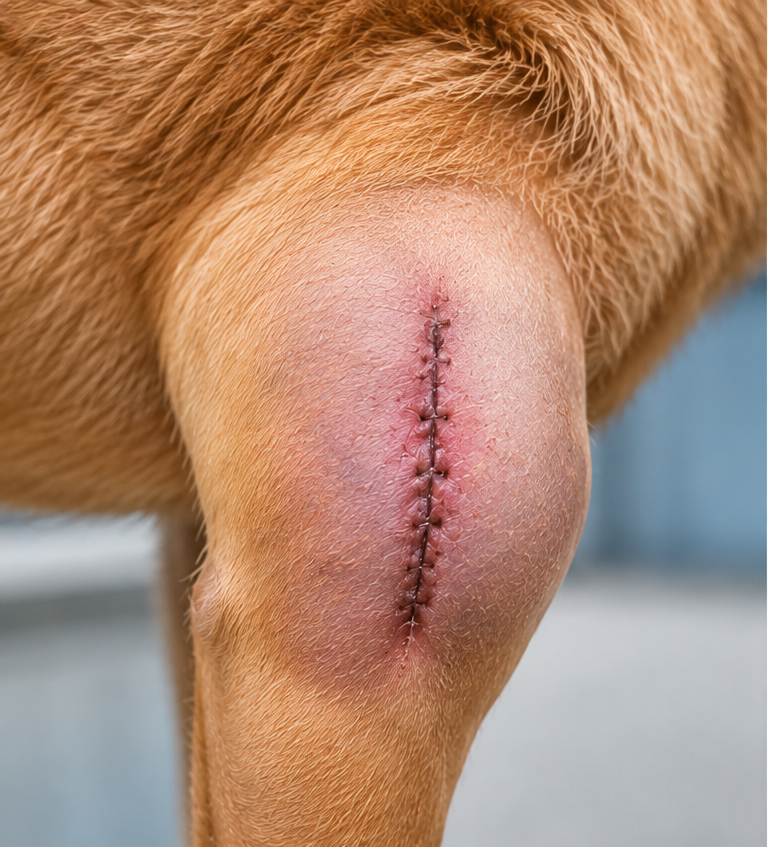
What Should a TPLO Incision Look Like?
A healing TPLO incision is generally closed, clean, and dry. Mild redness, bruising, swelling, or firmness can occur during the early postoperative period, but these changes should generally improve rather than become progressively worse.
Monitor the incision every day and contact Liberty Animal Hospital if you notice increasing redness, significant swelling, persistent bleeding, discharge, foul odor, or the incision opening.
Preventing your dog from licking or chewing the incision is also important because irritation can delay healing and increase the risk of infection.
What Is a Seroma After TPLO Surgery?
A seroma is a pocket of fluid that can develop under the skin near a surgical site. After TPLO surgery, a seroma may appear as a soft or fluid-filled swelling close to the incision.
Seromas can develop as tissues heal, and increased activity may contribute to fluid accumulation. This is one reason strict postoperative activity restriction is important.
Some seromas gradually resolve as the body reabsorbs the fluid. However, not every swelling after surgery is a seroma. Infection, bleeding, inflammation, or another postoperative complication can produce similar symptoms.
Do not attempt to drain, puncture, massage, or otherwise treat a suspected seroma at home unless specifically instructed by your veterinarian.
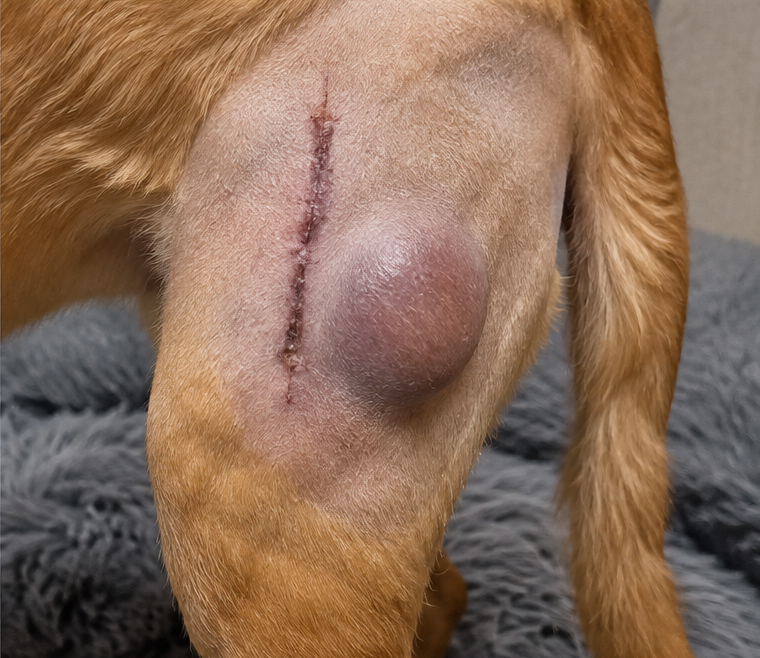
TPLO Seroma: A localized fluid-filled swelling near the surgical site. Images are for educational purposes and do not replace a veterinary examination.
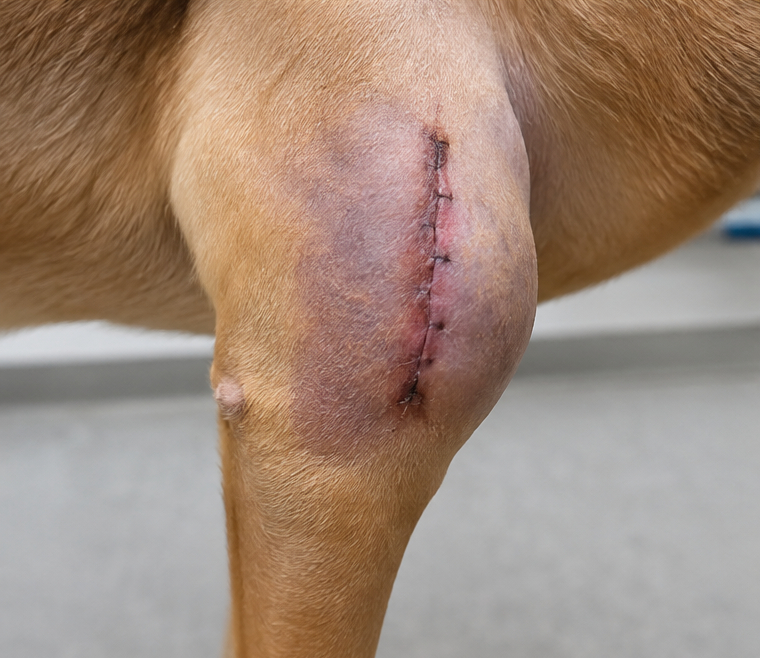
Postoperative Swelling: A swelling near a TPLO incision may have several possible causes. Your veterinarian should evaluate concerning or persistent swelling.
TPLO Seroma vs. Infection
It can be difficult to determine the cause of postoperative swelling just by looking at it. A seroma may be soft and fluid-filled, while an infection may cause increasing redness, heat, pain, discharge, or odor.
Contact your veterinary team if the swelling is increasing, becomes painful or hot, develops discharge, or is accompanied by other signs of illness.
Signs That May Require Veterinary Attention
- Rapidly increasing swelling
- Increasing redness or heat around the incision
- Persistent bleeding
- Pus or abnormal discharge
- Foul odor from the incision
- The incision opening or becoming damaged
- Increasing or severe pain
- Sudden worsening of lameness
- Marked lethargy or loss of appetite
- Vomiting or other signs of illness
How Can Rehabilitation Help After TPLO?
Rehabilitation can be an important part of recovery after TPLO surgery. Depending on your dog’s condition and stage of healing, a rehabilitation program may help improve muscle strength, joint range of motion, balance, coordination, and overall limb function.
Controlled activity is important because doing too much too soon can place unnecessary stress on the healing limb. Your veterinary team can recommend when specific exercises should begin and how quickly activity should progress.
Follow-Up Care After TPLO
Follow-up examinations help your veterinarian evaluate the incision, comfort level, limb use, and overall progress. Radiographs may also be recommended to determine whether the osteotomy has healed sufficiently before allowing more strenuous activity.
Do not assume that a dog is ready for unrestricted exercise simply because the leg appears comfortable. The healing bone needs adequate time and protection before your dog returns to running, jumping, or other high-impact activities.
Tips for a Successful TPLO Recovery
- Follow all postoperative instructions from your veterinary surgeon.
- Keep activity restricted until your veterinarian approves an increase.
- Use a leash for controlled walks during the recovery period.
- Prevent jumping on furniture and going up or down unnecessary stairs.
- Keep the surgical incision clean and dry.
- Prevent licking and chewing with an appropriate protective collar or device.
- Give medications exactly as prescribed.
- Attend all recommended follow-up examinations.
- Follow the recommended rehabilitation program.
- Contact your veterinary team if your dog’s recovery suddenly gets worse.
When Can My Dog Return to Normal Activity After TPLO?
The return to normal activity should be gradual and based on healing rather than your dog’s enthusiasm or comfort level alone. Your veterinarian may use physical examinations and follow-up radiographs to determine when activity can safely increase.
Running, jumping, off-leash play, swimming, and other strenuous activities should only be resumed when your veterinary team confirms that your dog is ready.
Frequently Asked Questions About TPLO Recovery
How long does it take for a dog to recover from TPLO surgery?
TPLO recovery generally takes several weeks to months. Dogs may begin using the operated leg relatively soon after surgery, but the bone continues healing for several weeks. A gradual return to normal activity should occur only after your veterinarian confirms appropriate healing.
When should my dog start putting weight on the leg after TPLO?
Many dogs begin putting some weight on the operated leg during the early recovery period, but the timing varies. If your dog is not progressing as expected or suddenly stops using the leg after initially improving, contact your veterinary team.
How long should my dog be restricted after TPLO?
Activity restriction commonly continues for several weeks while the osteotomy heals. The exact timeline depends on your dog’s recovery, examination findings, and follow-up imaging.
Can my dog walk around the house after TPLO surgery?
Your dog should have controlled movement rather than unrestricted access to the house. Keep your dog in a safe area where running, jumping, and access to slippery floors or stairs can be prevented.
Can my dog climb stairs after TPLO surgery?
Stairs may increase the risk of slipping, jumping, or placing excessive stress on the recovering limb. Follow your veterinarian’s specific instructions and limit stair use whenever possible during the early recovery period.
Can my dog jump on the couch after TPLO?
No. Jumping on or off furniture should generally be prevented during TPLO recovery. Even a short jump can place substantial force on a healing limb.
When can my dog run after TPLO surgery?
Running should not resume until your veterinary team confirms adequate healing. Once approved, exercise should generally be increased gradually rather than returning immediately to unrestricted running.
What does a TPLO seroma look like?
A seroma may appear as a localized, soft, or fluid-filled swelling beneath the skin near the TPLO surgical site. However, swelling can have several causes, so a veterinarian should evaluate concerning or persistent swelling.
Is a seroma after TPLO surgery dangerous?
Some seromas are minor and resolve as the body reabsorbs the fluid. However, swelling can also be caused by infection, bleeding, inflammation, or other complications, so your veterinarian should assess significant or worsening swelling.
How long does a TPLO seroma last?
The duration varies depending on the size of the fluid collection and the individual dog’s healing process. Some seromas resolve with monitoring, while others may require veterinary treatment.
Should I drain a TPLO seroma at home?
No. Do not puncture or drain a suspected seroma unless your veterinarian specifically instructs you to do so. Attempting to drain it at home can introduce bacteria and create additional complications.
How do I know if my dog’s TPLO swelling is infected?
Increasing redness, heat, pain, abnormal discharge, foul odor, worsening swelling, or signs of illness may indicate infection or another complication. Contact your veterinary team if these symptoms occur.
What should a normal TPLO incision look like?
A healing incision is generally clean, closed, and dry. Mild redness or swelling may occur early in recovery, but worsening redness, swelling, discharge, bleeding, odor, or separation of the incision should be evaluated by a veterinarian.
How can I stop my dog from licking the TPLO incision?
An Elizabethan collar or other veterinarian-approved protective device can help prevent licking and chewing. Your dog should not be allowed to repeatedly irritate or damage the surgical site.
When should rehabilitation start after TPLO?
Rehabilitation timing varies between patients. Your veterinarian or veterinary rehabilitation professional can recommend appropriate exercises based on your dog’s surgical procedure, healing progress, and overall condition.
Why is my dog still limping after TPLO?
Some lameness can continue during recovery as the bone, muscles, soft tissues, and knee joint heal. However, worsening lameness or a sudden return of significant lameness after improvement should be reported to your veterinarian.
Why is my dog’s leg swollen after TPLO?
Mild postoperative swelling can occur, but swelling that becomes larger, painful, hot, red, or persistent should be evaluated. A seroma is one possible cause, but infection or other complications may look similar.
When can my dog swim after TPLO surgery?
Swimming should generally be avoided until the incision is fully healed and your veterinary team confirms that swimming or hydrotherapy is appropriate for your dog.
How can I help my dog recover after TPLO?
Follow the prescribed activity restrictions, protect the incision, administer medications correctly, attend follow-up appointments, and follow the recommended rehabilitation plan. Consistent aftercare is one of the best ways to support recovery.
When should I call the veterinarian during TPLO recovery?
Contact your veterinary team if you notice increasing swelling, redness, discharge, bleeding, incision separation, significant pain, sudden worsening of lameness, loss of appetite, marked lethargy, or any other concerning change in your dog’s recovery.